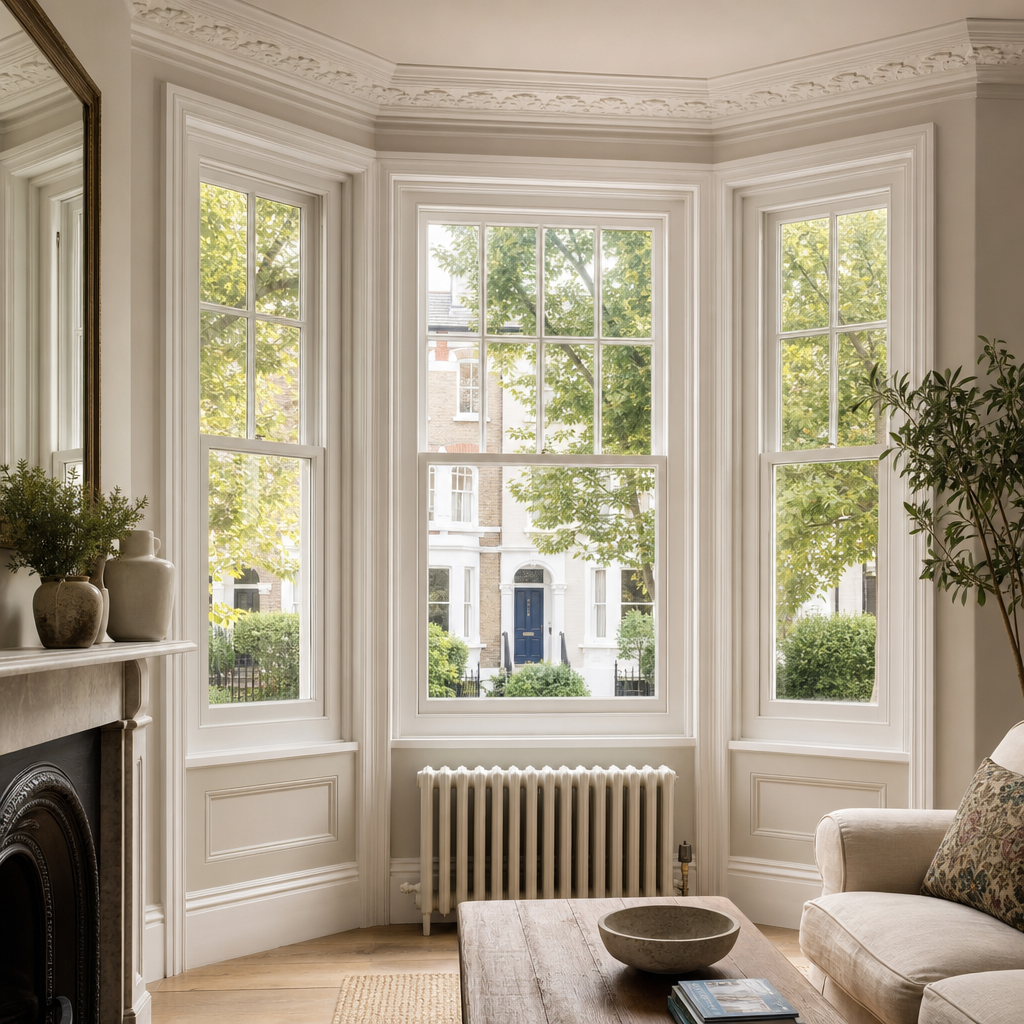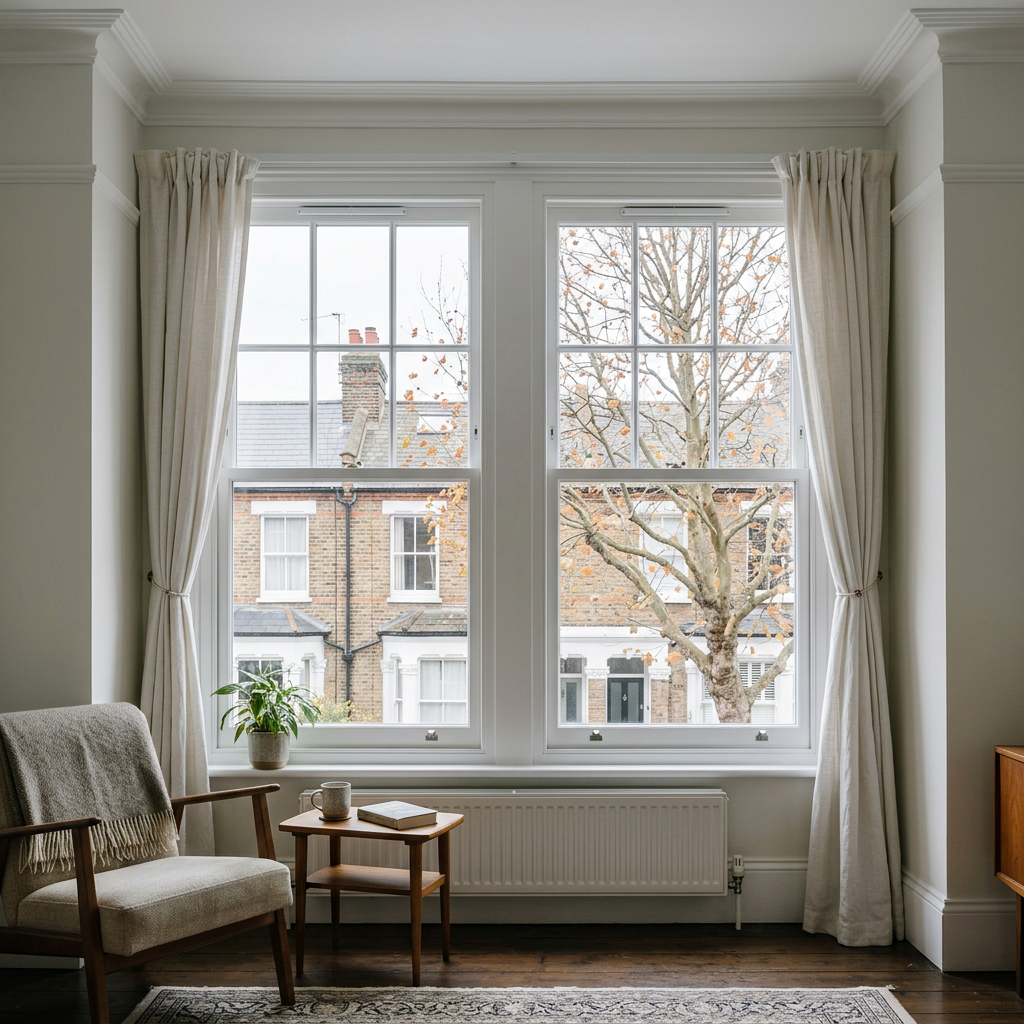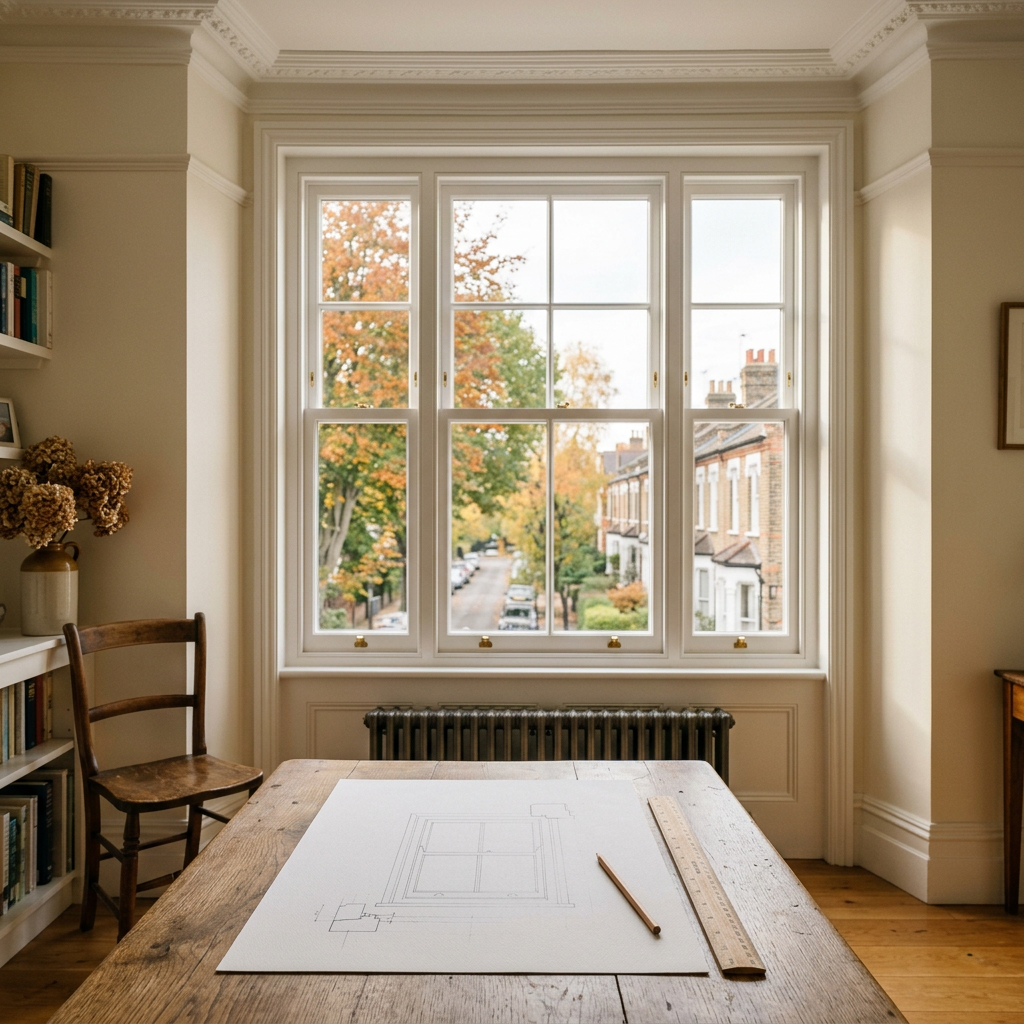
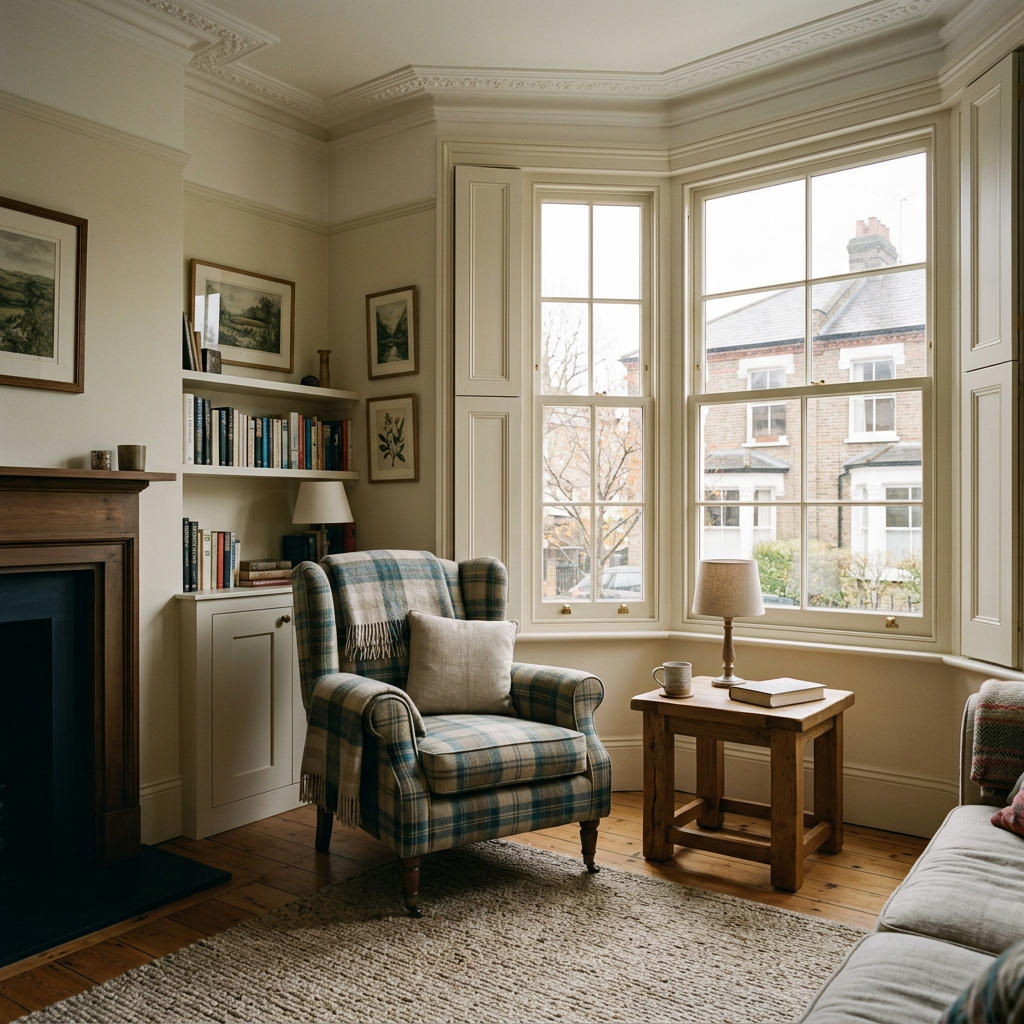
Lower heating bills are appealing, but they are only part of the picture. Learn how to assess energy savings and everyday comfort before ordering replacement timber windows.
As November temperatures fall, a cold seat beside the window can make replacement glazing feel urgent. For owners of period homes in Clapham, Battersea, Putney and Richmond, the question often becomes financial: will new timber windows eventually pay for themselves through lower heating bills?
Energy efficient replacements can reduce heat loss, but a quick financial payback should not be assumed. The result depends on the windows you have now, the replacements you choose and how you heat your home. This guide explains how to weigh potential savings alongside the comfort and practical benefits of bespoke timber window replacement.
Start With the Windows You Are Replacing
Replacing single glazing with well specified double glazed timber windows is a different starting point from replacing windows that already have effective double glazing. A savings figure based on the first situation should not automatically be applied to the second.
The number and size of the windows matter too. A published estimate for replacing every window in a house does not describe the likely saving from changing two front bedroom windows.
At your survey, explain which rooms feel uncomfortable and what glazing is currently fitted. Ask for the proposed specification to be compared with that starting point, not simply with a generic example of an inefficient home.
Why a National Saving Is Not Your Personal Forecast
Energy Saving Trust publishes estimates for defined examples, including the replacement of single glazing with energy rated double glazing. These are useful context, but they are not a guarantee for an individual property.
A sheltered mid terrace in Battersea and an exposed detached house in Wimbledon can have different heat loss patterns. Heating fuel, thermostat settings, occupancy and the hours the heating runs also affect how much energy a household uses.
Before accepting a savings claim, ask which house type, existing glazing, fuel price and heating pattern it assumes. Be particularly cautious when a percentage has no explanation of whether it refers to heat loss through the windows or the whole household energy bill.
Understand What Simple Payback Leaves Out
A simple payback calculation divides the installed cost by the estimated annual financial saving. It can help explain a claim, but it assumes the saving remains consistent and does not account for changes in energy prices, financing costs or future expenditure.
For bespoke timber replacements, the upfront price also pays for manufacturing, heritage detailing, finishing and installation. Those features cannot all be valued through a heating bill calculation.
If savings alone would take a long time to recover the cost, that does not automatically make replacement the wrong decision. It means the decision should be based on the complete purpose of the project rather than a promise that the windows will quickly fund themselves.
Comfort Can Improve Without a Dramatic Bill Reduction
A cold internal glass surface can make a nearby seat feel uncomfortable even when the room thermostat shows a reasonable temperature. Better insulating glazing can improve the temperature of that surface under comparable conditions.
Well fitted replacement frames and seals can also reduce uncontrolled draughts. This matters in a bay window dining area or a bedroom where the bed sits close to the external wall.
Some households use the improvement to enjoy warmer rooms rather than reduce their heating settings. In that case, the comfort benefit may be more noticeable than the financial saving. Neither outcome should be confused with a guaranteed reduction in bills.
Compare the Whole Window, Not Just the Glass
A glass specification is only part of a replacement window. The frame, edge of the glazing, seals and installation all contribute to the finished result.
A U value describes how readily heat passes through a component: lower values indicate less heat transfer under the stated conditions. Ask whether a quoted figure describes the glazing or the complete window before comparing it with another quotation.
Window energy ratings consider more than heat transfer alone, including solar gain and air leakage. Ask for the performance information that applies to your proposed product and configuration, rather than assuming a rating for one design covers every bespoke size or glazing arrangement.
Keep Ventilation and Heritage Requirements in the Plan
Reducing unwanted gaps around windows does not remove the need for adequate ventilation. The replacement design should account for the home's existing arrangements and the relevant requirements, rather than treating all incoming air as something to eliminate.
For a listed building or a property with relevant planning restrictions, establish what replacement design can be approved before comparing performance figures. Slim profiles, glazing bars and the appearance of the frame may be important to the permitted specification.
Energy performance should be assessed within those constraints. Do not assume that the highest advertised specification is available or appropriate for every period opening, or that an energy saving claim removes the need for consent.
Ask These Questions Before Ordering
What improvement is expected compared with my existing glazing? Does the performance information cover the complete window? Which assumptions support any financial savings estimate?
Also ask what the quotation includes for the frame, glazing, paint finish, ironmongery, installation and completion documentation. A clearly defined replacement specification is more useful than an impressive but unexplained promise about energy bills.
Finally, identify your priorities. They might include a more comfortable bedroom, easier operation, appropriate period detailing and reduced heat loss. Record those priorities so that the proposed windows address the reasons you are replacing them.
Make the Decision Around Your Home
Sash Timber Windows offers bespoke timber sash and casement window replacement across South West London, combining period detailing with modern glazing and sealing. A survey is the right opportunity to discuss your existing windows, comfort concerns and proposed specification.
The strongest reason to choose replacement timber windows is an informed combination of practical needs, appearance and performance. Treat lower energy use as a potential benefit to assess honestly, not a shortcut to a guaranteed financial return.