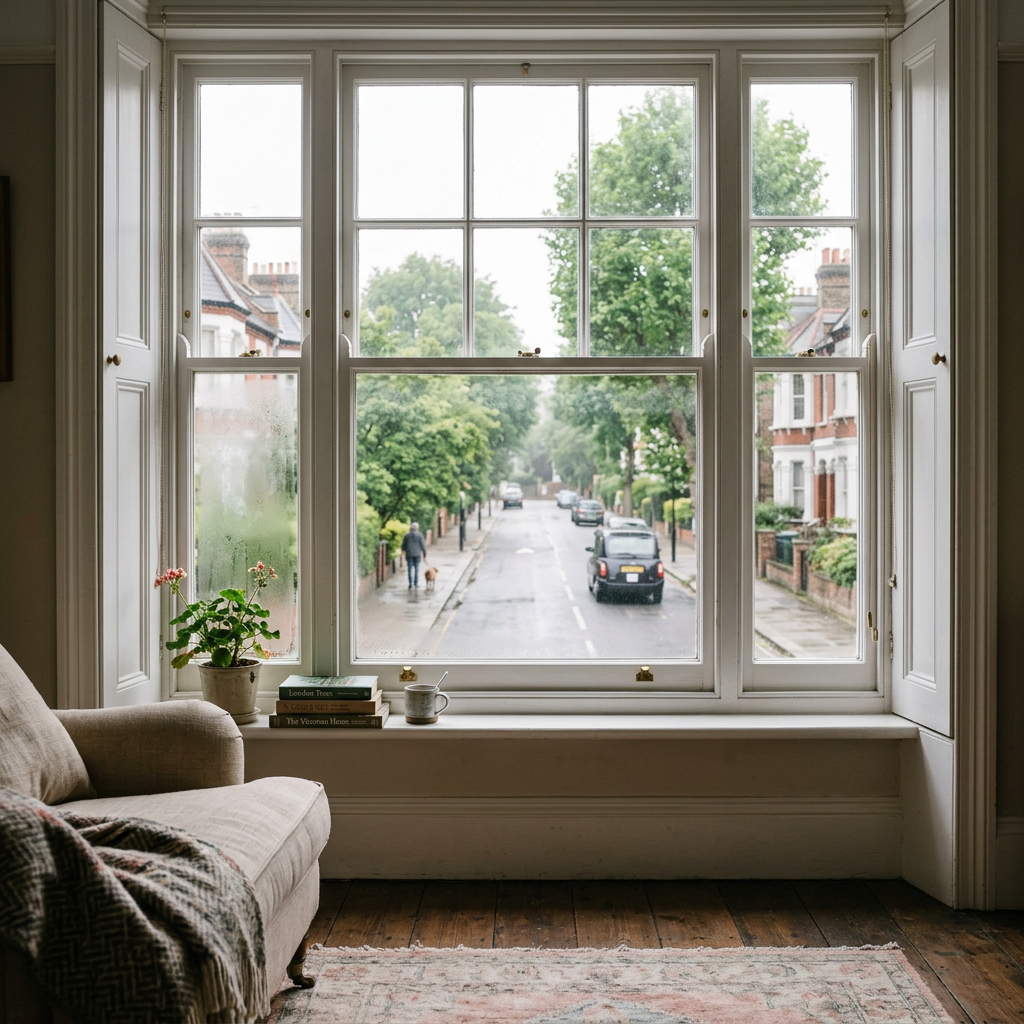
Misted glass, damp cills and black mould are common complaints in South West London's older houses. Learn what condensation is telling you about your windows and how to cure it.
Wake up on a cool morning in a Victorian terrace in Earlsfield, Teddington or Tooting and you may find the bottom of every window pane misted over, with little pools of water gathering on the cills. Condensation is one of the most common complaints we hear from owners of period homes in South West London, and left unchecked it leads to peeling paint, damp timber and black mould around the frames. The good news is that it is entirely curable once you understand what causes it.
What Causes Condensation?
Everyday life puts a surprising amount of moisture into the air. Cooking, showering, drying laundry indoors and even breathing release several litres of water vapour into a typical household every day. Warm air holds that moisture invisibly, but when it touches a cold surface it releases it as liquid water.
In a period home, the coldest surface in any room is almost always the glass of a single glazed window. That is why the moisture appears there first: your windows are acting as a dehumidifier for the whole room, collecting water that then runs down onto the timber below.
Why Older Homes Suffer More
Victorian and Edwardian houses were built to breathe. Open chimneys, suspended timber floors and naturally leaky windows once carried moist air out of the building without anyone thinking about it. Decades of well intentioned improvements, such as blocked fireplaces, sealed floors and draught excluders, have made these homes far more airtight without adding any deliberate ventilation, so moisture that once escaped now settles on the glass.
Everyday Habits That Help
Simple changes make a real difference. Keep lids on saucepans, run the extractor fan during and after cooking and bathing, dry laundry outdoors or in a vented space rather than on radiators, and open bedroom windows briefly each morning to flush out overnight moisture. Keeping a low background heat in cold weather also helps, because steady warmth keeps surfaces above the temperature at which moisture condenses.
How Better Windows Cure the Problem
Habits reduce condensation, but the lasting cure is to remove the cold surface. Double glazed timber sash windows keep the inner pane close to room temperature, so moist air touching the glass no longer releases its water. Slimline units achieve this even within the delicate glazing bars of a conservation area property.
Modern timber windows also include discreet trickle ventilation, which allows a gentle, controlled flow of fresh air even when the window is locked. This restores the steady background ventilation that period homes were designed around, without draughts, noise or any change to the window's traditional appearance.
A Note on Condensation Between Panes
One exception is worth knowing. If mist appears between the two panes of an existing double glazed unit, the seal of that unit has failed and no amount of ventilation will clear it. The glazed unit needs replacing, though the timber frame around it is usually perfectly sound.
If damp glass, wet cills or mould are a regular feature of winter in your home, ask us for a survey. We will identify whether the cause is the glazing, the ventilation or the window itself, and recommend the most economical way to put it right.