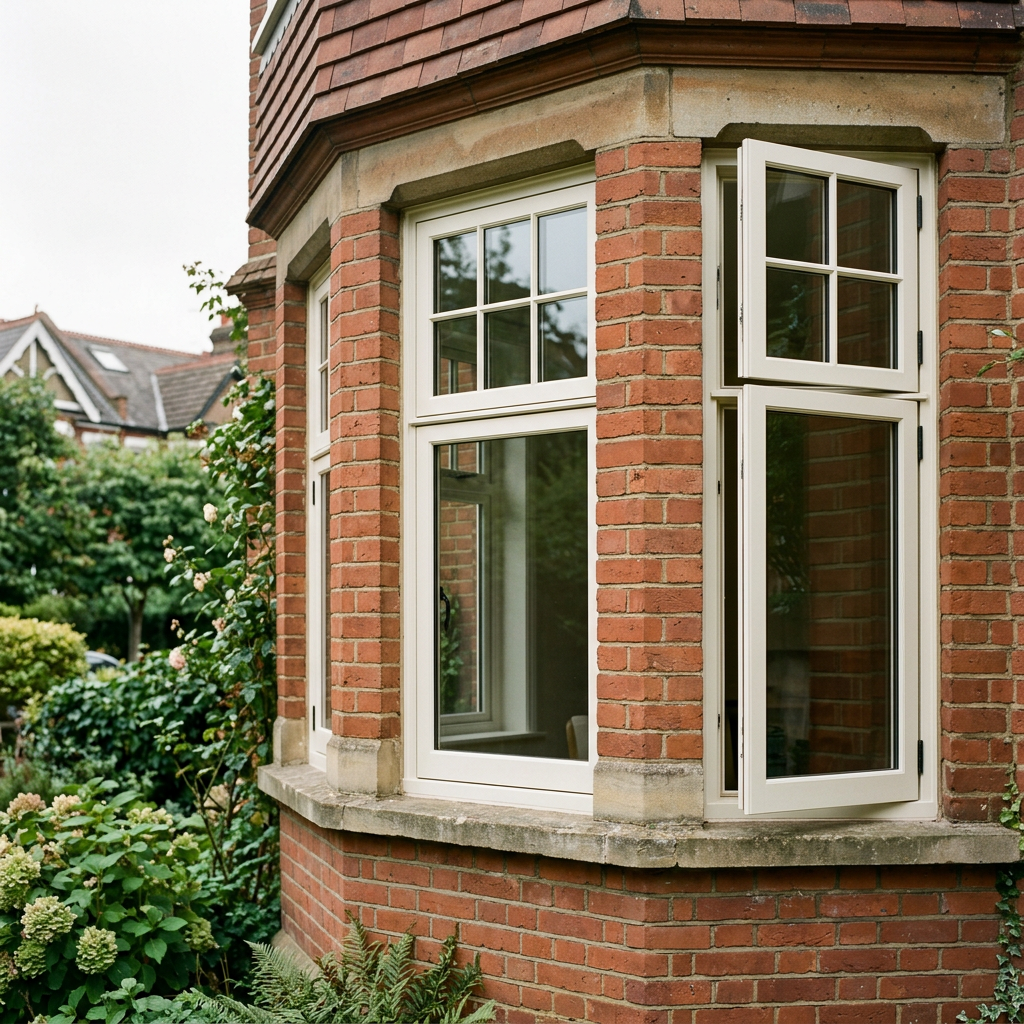
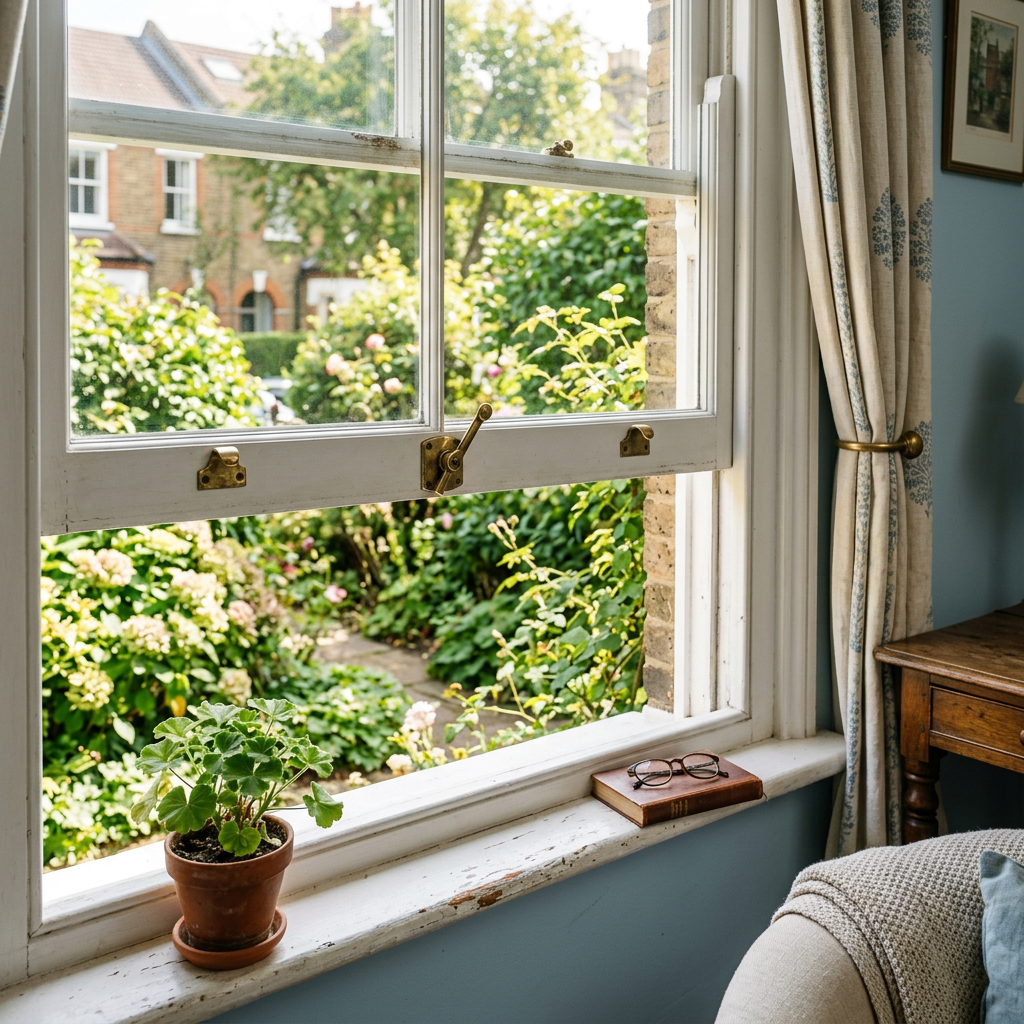
A simple late summer checklist for keeping timber sash windows warm, weatherproof and working smoothly through the colder months.
Late August is the ideal time to prepare the timber sash windows in your South West London home for autumn. The days are still long enough to inspect the outside of the frames, touch up small areas of paint and arrange any joinery before the first persistent rain arrives. A little attention now can prevent damp timber, draughts and expensive repairs later in the year.
Start With a Careful Inspection
Walk around each room and open every sash slowly. Look for windows that stick, drop suddenly or refuse to close fully. These symptoms often point to a worn sash cord, a swollen section of timber or layers of paint restricting the movement. Never force a stiff sash, because a sudden release can damage the cord or the pulley.
From outside, check the lower corners of the frame, the cill and the bottom rail of the lower sash. These areas receive the most rain. Sound timber feels firm when pressed gently with a fingertip. Soft or crumbly areas need attention before water can travel deeper into the frame.
Clean the Channels and Drainage Points
Dust, old paint flakes and insects can gather in the channels where the sashes slide. Remove loose debris with a soft brush and vacuum, taking care not to scratch the timber. Check that the small drainage openings in the outer cill are clear, as these allow rainwater to escape rather than sit against the wood.
Use a slightly damp cloth for the painted surfaces and dry them afterwards. Avoid soaking the timber and avoid strong household cleaners, which can dull the finish or weaken the paint at the joints.
Check the Paint and Sealant
Paint is the first line of defence for a timber window. Look for hairline cracks, peeling areas and gaps where the paint meets the glass. Small defects can often be lightly prepared and repainted during dry weather. Flaking paint should never simply be painted over, because trapped moisture will continue to damage the timber underneath.
Pay particular attention to the joint between the frame and the surrounding masonry. Aged sealant can split and allow rain behind the frame. If the gap is wide, damp or difficult to reach safely, arrange a professional inspection rather than trying to fill it from a ladder.
Reduce Draughts Without Losing Character
A properly draught proofed sash window should move smoothly while closing tightly. Discreet brush seals can be fitted around the meeting rails and the edges of the sashes to reduce cold air and rattling, without changing the traditional appearance. This is often a sensible improvement for period homes in Barnes, Putney, Wimbledon and Richmond.
Draught proofing is different from permanently sealing a window shut. Your rooms still need controlled ventilation, especially during cooking and bathing, so keep existing vents clear and use extractor fans to manage moisture.
When to Book a Professional Survey
Arrange advice before winter if you find soft timber, misted glass between panes, broken cords, loose pulleys or a sash that will not close securely. A survey can separate a small maintenance job from a more serious repair and help you plan work before the weather becomes difficult.
If your windows are beyond economical repair or you want better warmth and sound insulation, carefully designed timber replacements can preserve the proportions of your period property while adding modern glazing and security. Whether your home is in a conservation area or simply has original character worth protecting, the right approach begins with an honest assessment.